Skip to content

Cart

Your cart is empty

Ferrari 166 MM (1948) — The Colombo V12

Quentin Martinez

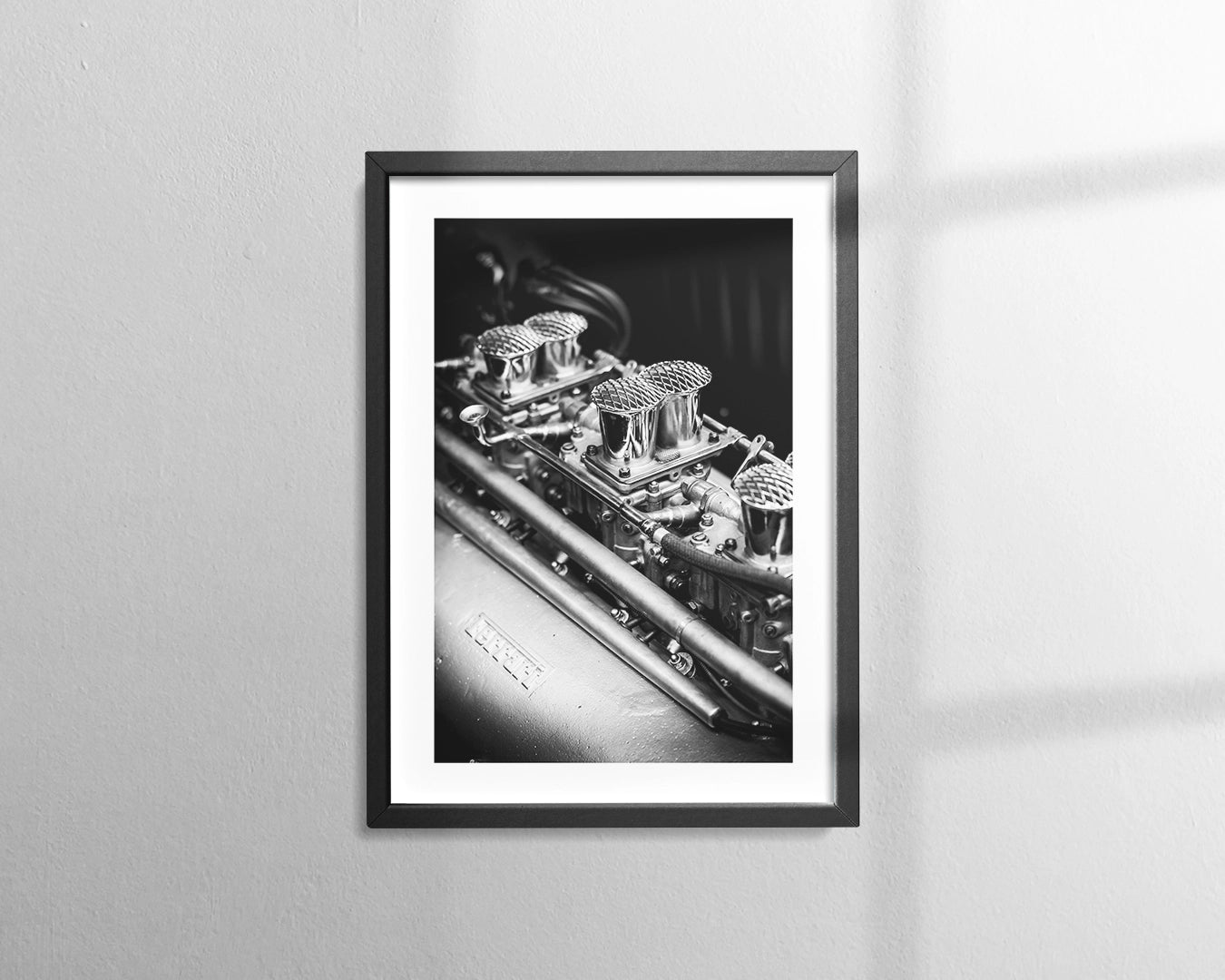
Gioacchino Colombo designed this engine in 1946 for Enzo Ferrari. It was a 60-degree V12 with a single overhead cam per bank, two valves per cylinder, and three Weber carburettors. It first ran on 12 March 1947, on the road between Maranello and Formigine, in a car that had no body. Two months later, the Ferrari 125 S raced for the first time. Every Ferrari that followed began here.

By 1948, the engine had grown to 1,995 cc in the Ferrari 166 MM — named for the Mille Miglia it was built to win. In 1949, the 166 MM won the Mille Miglia, the 24 Hours of Le Mans, and the Spa 24 Hours in the same season. The Colombo V12 would remain in production for over 40 years, powering the 250 GTO, the Daytona, and every iconic Ferrari that built the legend.

A study in the mechanical heart of the Maranello legend.

Limited edition fine art photograph. Signed and numbered. Printed on museum-grade paper. Made in Italy.

Limited Edition (49 pcs)

Museum-Grade Paper

Made in Italy

Shipped Protected and Insured


Format:
Size:
SIZE GUIDE & MATERIAL SPECIFICATIONS

FINE ART PAPER PRINTS We use Hahnemühle Photo Rag 308gr — a 100% cotton, museum-grade paper from one of the world’s oldest fine art paper mills (founded in 1584). Every piece is Giclée printed with archival pigment inks to ensure deep, stable tones that will last for generations.

  • A3 (30 × 42 cm): Framed in a slim, elegant pine profile.

  • A2 (42 × 60 cm): Framed in a Premium Tiglio (lime wood) profile, hand-painted black.

  • Statement Piece (85 × 60 cm): Framed in a Premium Tiglio (lime wood) profile, hand-painted black.

All framed prints are finished with museum-grade acrylic glazing (plexiglass), the standard material used by galleries worldwide for safe transport, superior clarity, and lasting protection. The framed option adds a small, refined outer border beyond the print size.

ALUMINUM PRINTS Offered in two large-scale formats:

  • Collector’s Piece (approx. 100 cm wide)

  • Statement Piece (approx. 140 cm wide)

Printed on a 3 mm aluminum panel, finished on a white or brushed aluminum base (depending on what best elevates the image). Height varies by artwork — please refer to the specific product images for exact dimensions.

Aluminum Display Notes: For large formats, we recommend leaning the piece. If wall-mounted, use professional hardware suitable for the weight and surface.

Click here for more

Sale price€179,00

Dispatched within 5–7 days · Free shipping Europe

100% Satisfaction Guarantee. Quality art, printed in Italy. Safe, insured shipping.

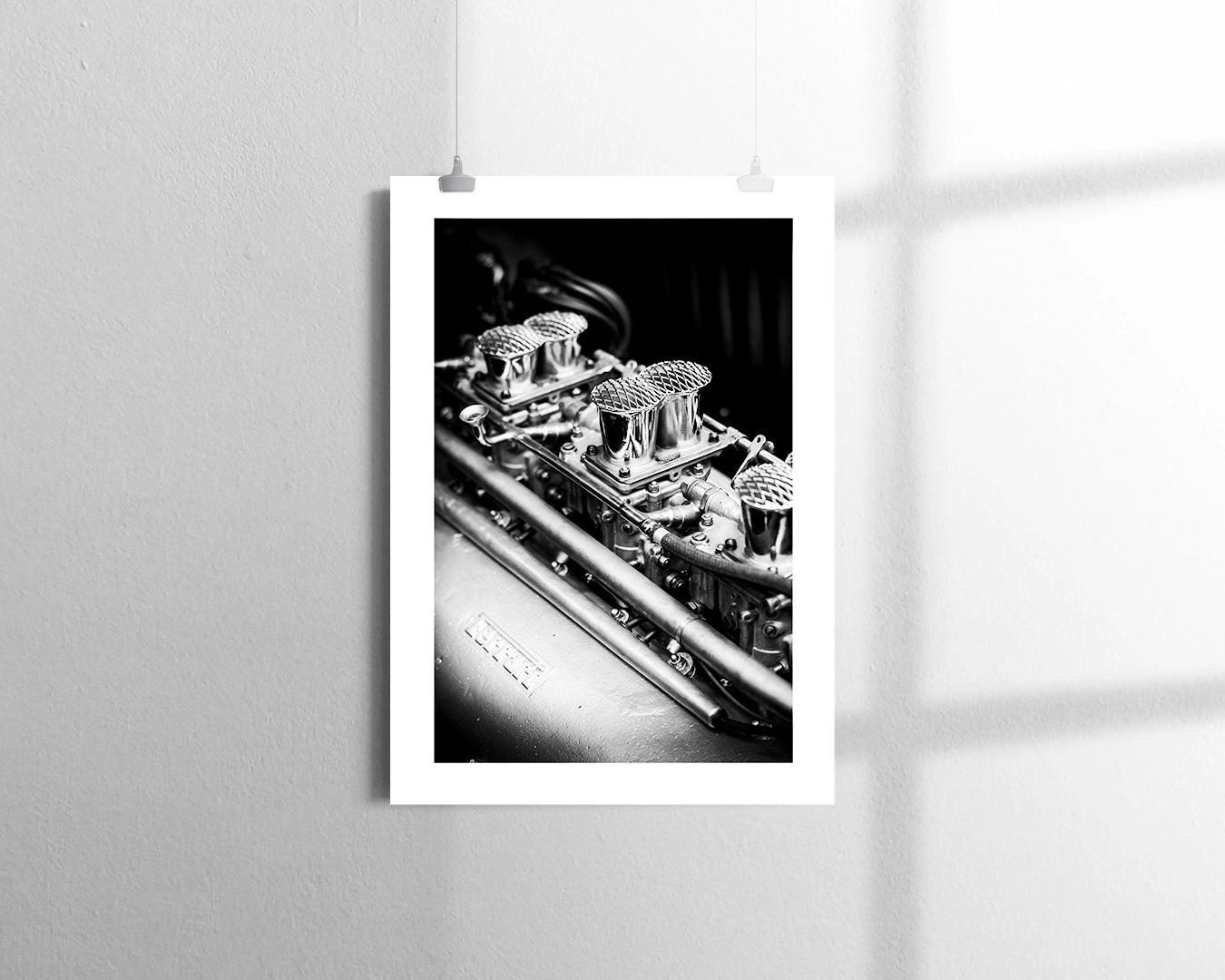
Ferrari 166 MM V12 engine 1948 fine art photograph unframed on Hahnemühle museum-grade cotton paper
Ferrari 166 MM (1948) — The Colombo V12 Sale price€179,00

FINE ART

Edition Details

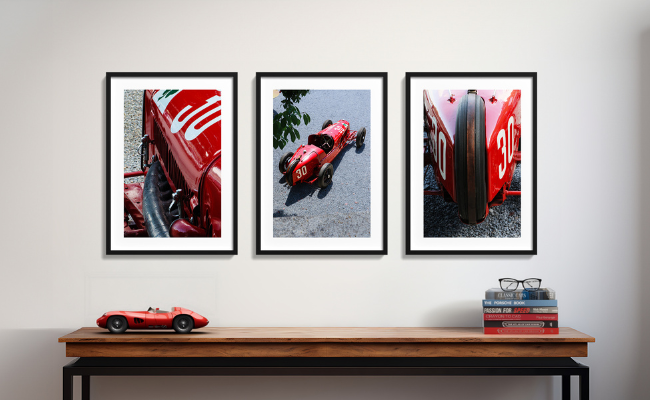
A framed photograph of a vintage red Alfa Romeo P2 race car, numbered 30

ONLY 49 PRINTS

Each photograph is part of a strictly limited edition of 49 — shared across all sizes and formats combined. Every certificate reads 1 of 49. The edition is not divided by size or format. Every buyer owns the same piece.

Hahnemühle Photo Rag Metallic paper

FINE ART PHOTOGRAPH

Printed on Hahnemühle Photo Rag 308gr — a 100% cotton museum-grade paper from one of the world's oldest paper mills, founded in 1584. Rich tones, crisp detail, and a calm matte surface that holds the photograph without reflection.

Two framed posters of a vintage red race car with the number 30

PRINT OR FRAMED

Unframed prints ship flat in rigid protective packaging, ready for your chosen frame. Framed editions are presented in a hand-painted black gallery frame with plexiglass glazing — the standard used by galleries worldwide for safe transport.

STILL MOTION SIGNATURE
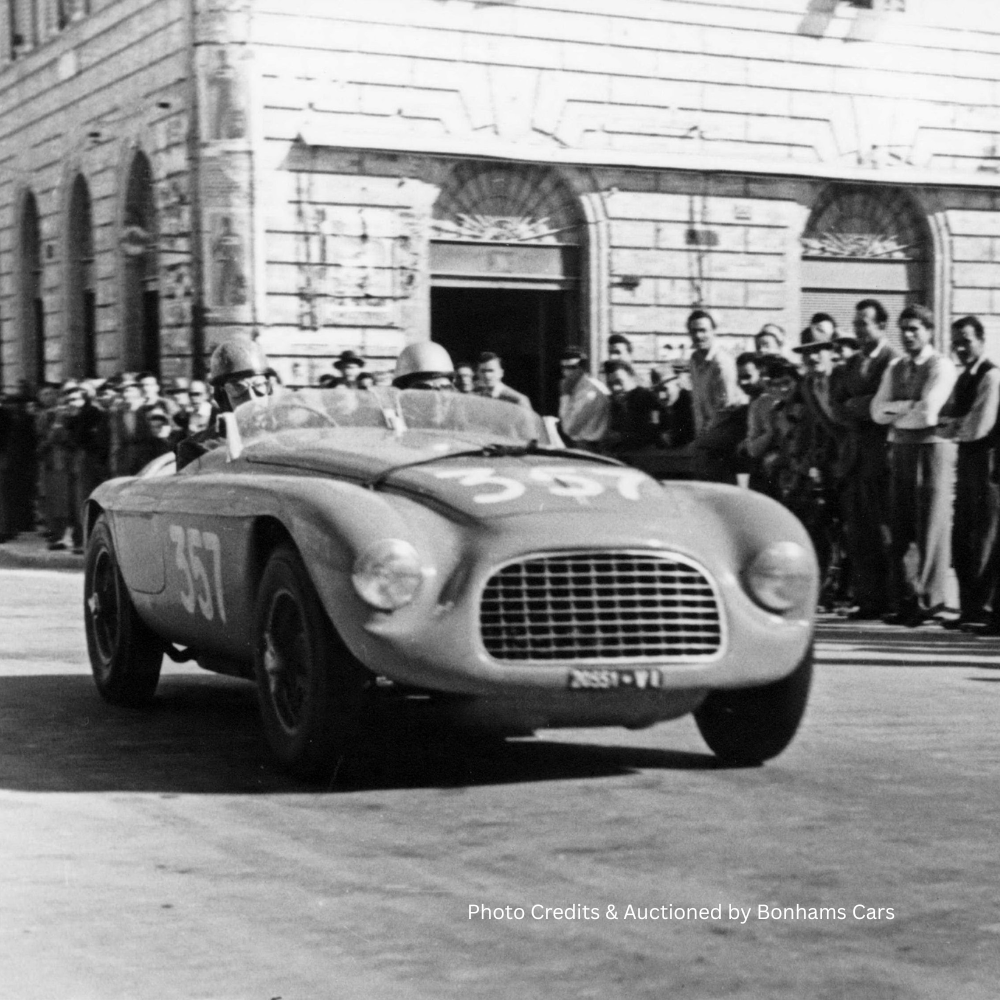
GIOACCHINO COLOMBO DESIGNED THIS V12 IN 1946. IT FIRST RAN ON THE ROAD BETWEEN MARANELLO AND FORMIGINE ON 12 MARCH 1947, IN A CAR THAT HAD NO BODY. EVERY FERRARI THAT FOLLOWED BEGAN HERE.

1951 Mille Miglia race

THE ENGINE THAT STARTED EVERYTHING

In 1946, Enzo Ferrari asked Gioacchino Colombo to design an engine. Ferrari had spent years running Alfa Romeo’s racing programme, admiring the V12 configurations of Packard, Auto Union, and Alfa’s own grand prix cars. Now he wanted one of his own — a compact, aluminium, 60-degree V12 that could power both racing cars and road cars. Colombo, who had previously designed the supercharged engine for Alfa Romeo’s legendary 158 Alfetta, accepted the commission. Working alongside Giuseppe Busso and Luigi Bazzi, he produced the Tipo 125 — a 1,497 cc V12 with a single overhead cam per bank, two valves per cylinder, and three 30DCF Weber carburettors.

The engine first ran on 12 March 1947, mounted in a bare chassis with no bodywork, on the road between Maranello and the village of Formigine. Two months later, on 11 May, the completed Ferrari 125 S made its racing debut at the Piacenza Circuit. It retired from that first race, but two weeks later won at Rome. The Ferrari era had begun. The Colombo V12 was named after the displacement of each individual cylinder — 125 cc multiplied by twelve gave 1,497 cc total. This naming convention would define Ferrari for decades.

By 1948, Colombo and Bazzi had increased the bore to 60 mm and the stroke to 58.8 mm, bringing the engine to 1,995 cc. This powered the Ferrari 166 — again named for the unitary displacement of 166.25 cc per cylinder. The MM designation stood for Mille Miglia, the thousand-mile race across Italy that the car was built to conquer. The 166 MM was introduced at the Turin Motor Show in November 1948, and in its most famous form wore bodywork by Carrozzeria Touring of Milan — the Barchetta, meaning ‘little boat’, a name that came from the gentle curve of its cockpit surround.

The Ferrari 166 MM’s 1949 season was extraordinary. Clemente Biondetti won the Mille Miglia. Luigi Chinetti and Lord Selsdon won the 24 Hours of Le Mans — Ferrari’s first victory at the Circuit de la Sarthe. Chinetti drove for over 23 of the 24 hours himself, a feat of endurance that has never been surpassed. The 166 MM also won the Spa 24 Hours. Three of endurance racing’s most important events, all in a single season, all powered by the same 2-litre Colombo V12.

The Colombo V12 outlived its creator’s involvement with Ferrari. Colombo left in 1950, returning to Alfa Romeo, but his engine was only beginning. The bore was progressively increased — to 68 mm, then 73 mm — creating the 3-litre unit that powered the Ferrari 250 series: the 250 GT, the 250 GTO, the 250 LM, the 250 Testa Rossa. These are among the most valuable and revered automobiles ever built. The 250 GTO, chassis 4153 GT, is estimated to be worth between $70 and $80 million. It runs a Colombo V12.

The engine continued to grow. The 275 GTB/4 received dual overhead cams. The 365 GTB/4 Daytona carried a 4.4-litre version. The final iteration, in the 412i of 1988, displaced 4,943 cc. Colombo’s design remained in production for over 40 years. This photograph captures the Ferrari 166 MM’s V12 at close range — the polished intake trumpets, the castings, the hardware of an engine that was hand-built in Maranello when Ferrari was a workshop, not yet an empire.

Our Curation

This piece exists because of a friendship with a photographer who understands that the mechanical heart of a car carries its entire history. The Ferrari 166 MM V12 was photographed at close range, isolating the intake trumpets, the castings, and the assembly work of an engine built by hand in the earliest years of Ferrari’s existence.

From a larger body of work, this frame was selected for what it reveals about the relationship between craft and engineering before Ferrari became an industrial operation. The refinement process brought forward the metallic texture and tonal depth of the engine components without altering the character of what was captured.

The result is not a reproduction. It is a perspective.

Cinematic motion blur of a racing car at speed, capturing the raw emotion of motorsport for Invictus Heights.
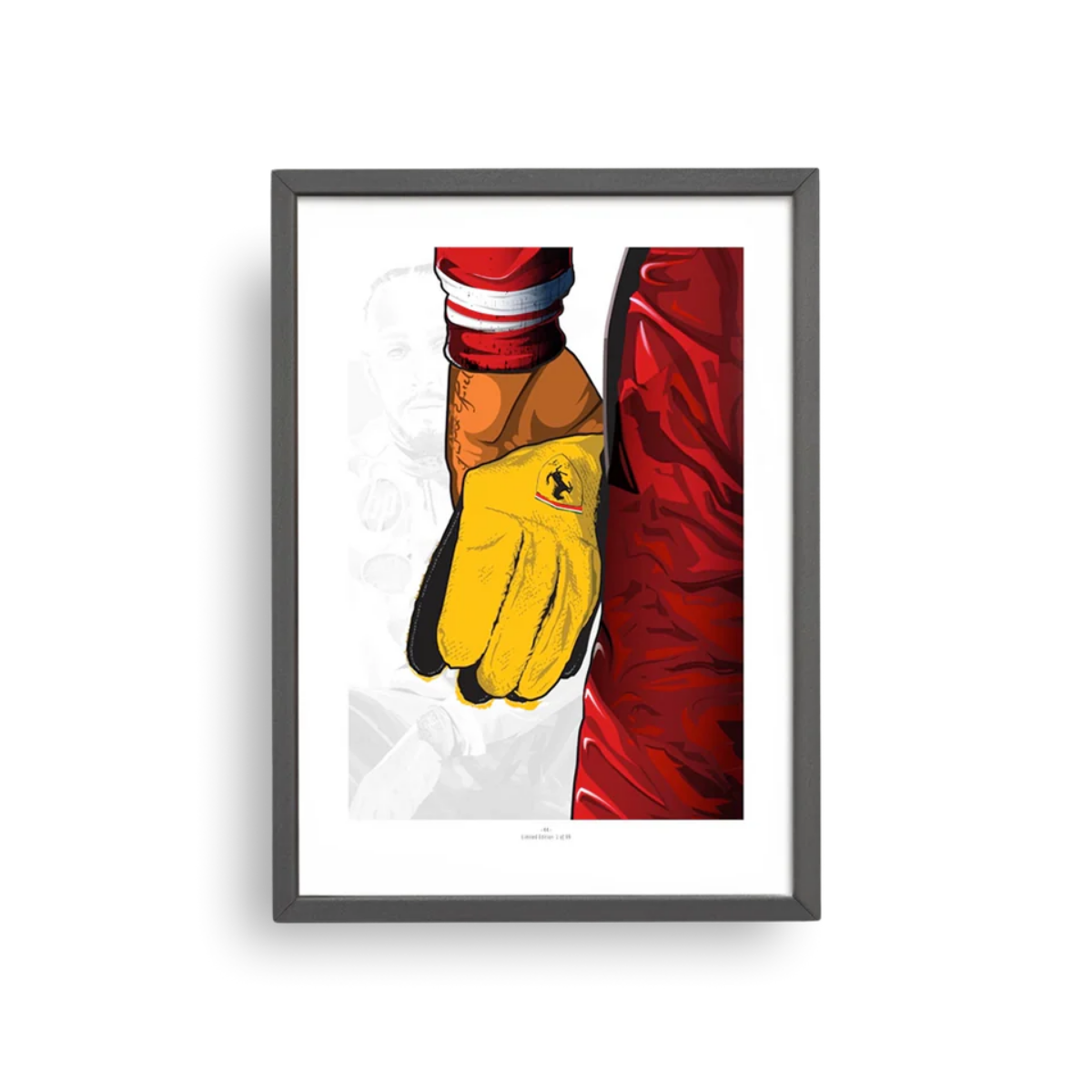
Exclusive Lewis Hamilton and Ferrari automotive art, a limited edition of 99 museum-quality prints by Invictus Heights.

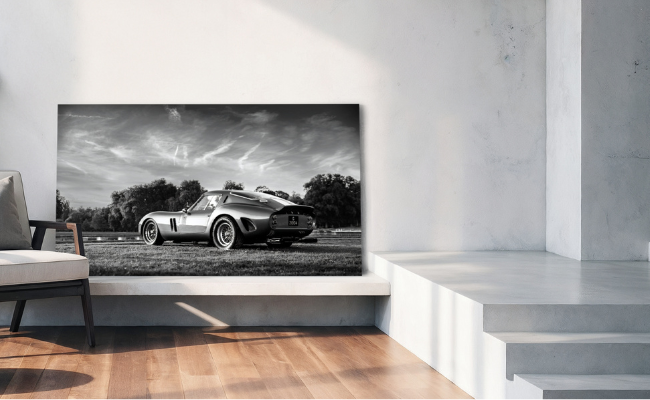
”A true collector’s piece — worthy and immediate addition to my collection.”

— A Ferrari Collector, Italy

Explore work
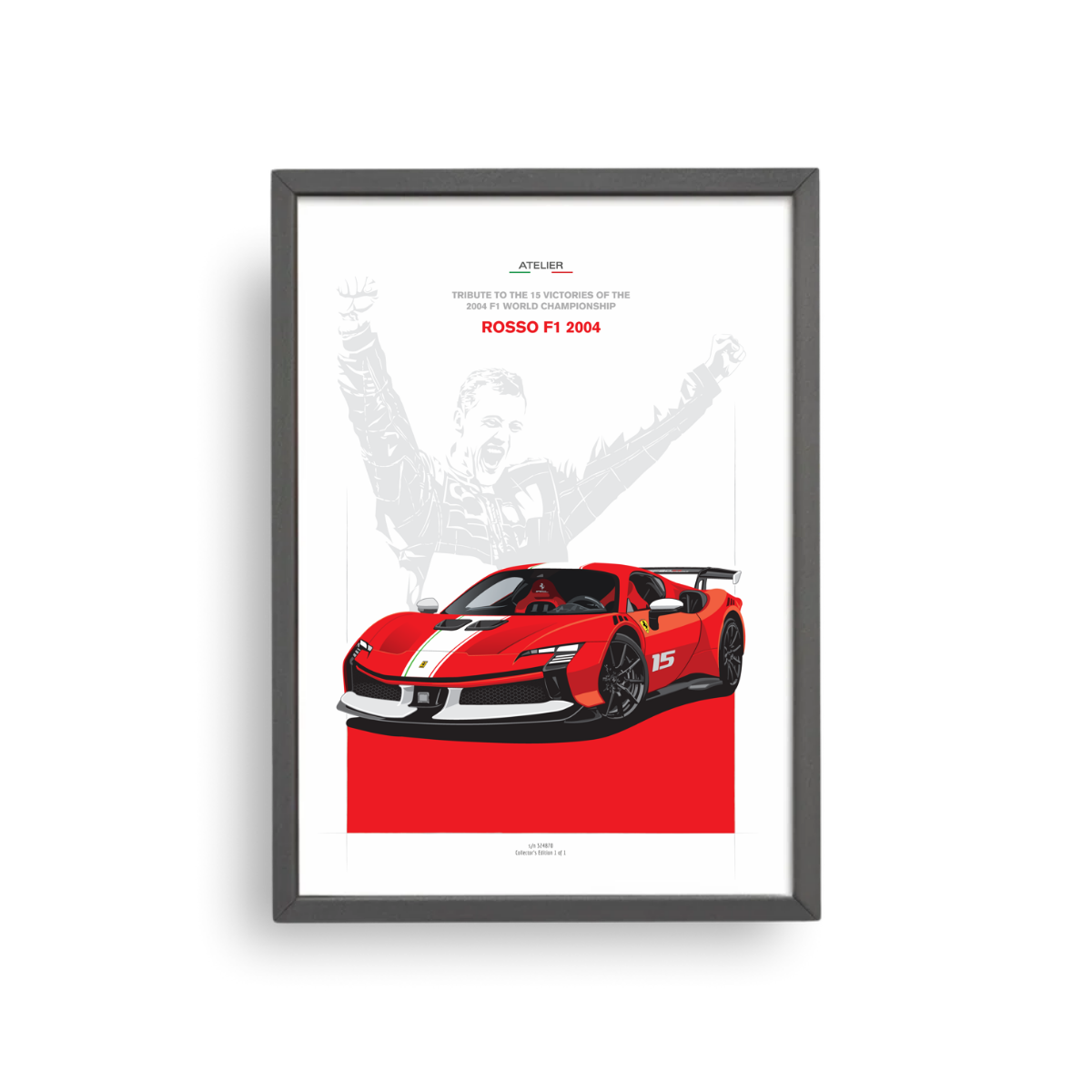
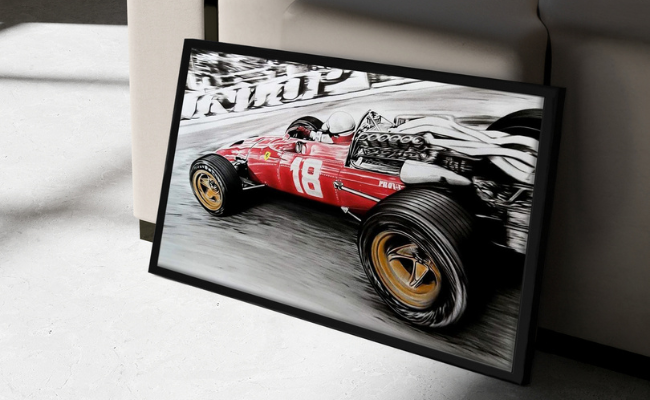
Bespoke Still Motion fine art commission featuring a Ferrari F1 tribute, custom-made for a private collector.

”Pure passion. This artwork captures the very soul of motorsport."

— A Ferrari Collector, France

Learn more

GOING DEEPER

COLLECTING

What it means to own a Still Motion edition — the standard, the certificate, the care.

What collectors should know

committed

The principles behind every piece we produce and every decision we make.

Our commitments
Two framed modern art prints featuring close-ups of red, white, and orange race car elements hanging on a white wall

MAINTENANCE TIPS

CARING FOR YOUR FINE ART PRINT

Giclée prints on archival cotton paper are made to last for generations when treated with care. Handle by the edges only. Keep away from direct sunlight, humidity, and heat sources. If displaying unframed, mount behind glass or plexiglass to protect the surface. To clean, dust the frame or glazing only with a soft, dry microfibre cloth. Never touch the print surface directly.