Skip to content

Cart

Your cart is empty

THE BLACK BOOK

Early access to new editions, The Vault, and everything the House keeps for those who understand why.

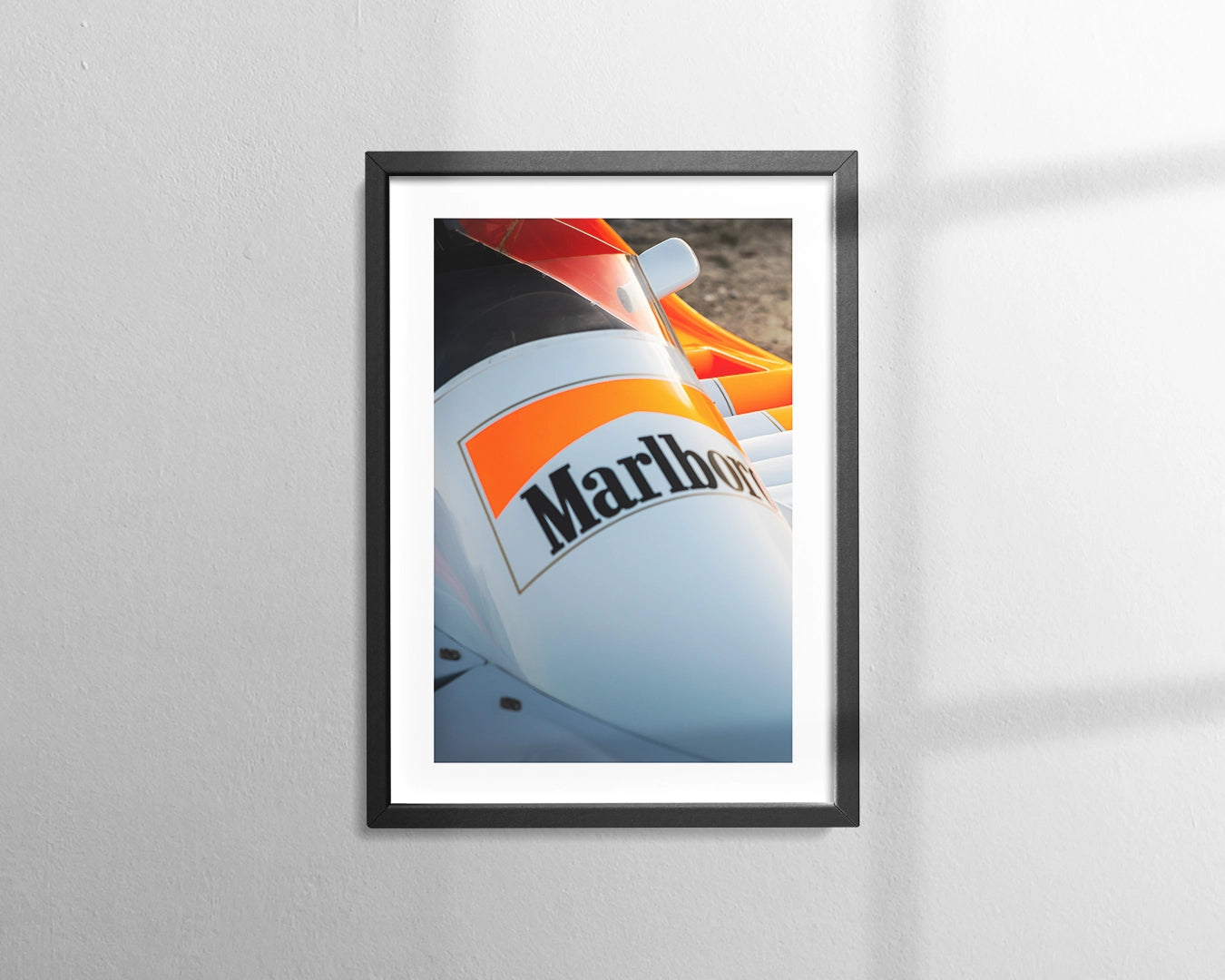
McLaren M28 (1979) — The Cooling Louvers

QUENTIN MARTINEZ

The McLaren M28 was the first works McLaren in Formula One history to fail to qualify for a Grand Prix. Patrick Tambay missed the grid in Belgium in 1979, then again in Monaco — consecutive races, consecutive failures for a team that had won the World Championship three years earlier.

Gordon Coppuck designed the M28 as McLaren’s first ground effect car. The narrow monocoque created so much frontal area that it was one of the slowest through the speed traps. John Watson, who drove it, later called it the worst Formula One car he ever sat in. Only three chassis were built. It lasted nine races.

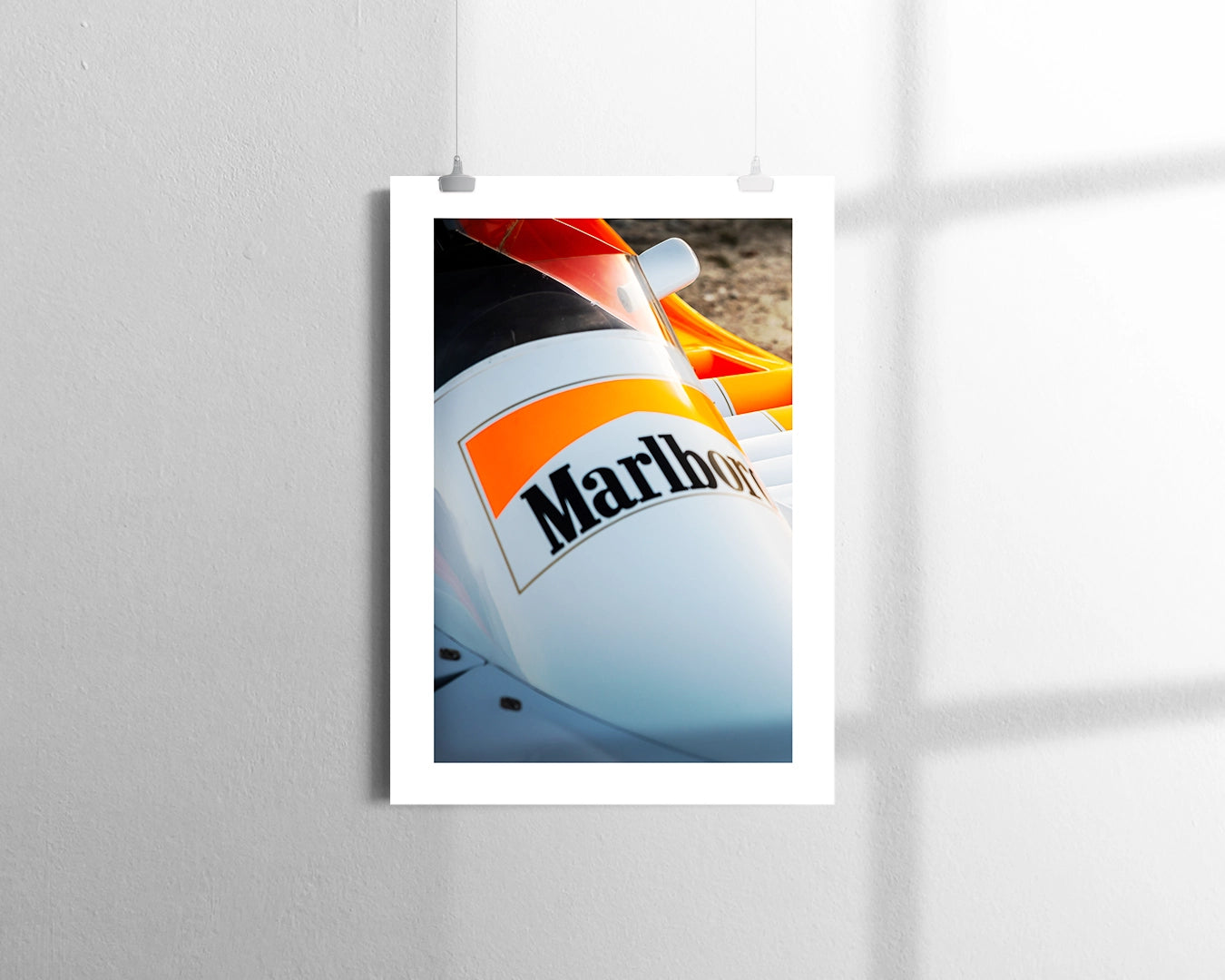
This is a limited edition fine art photograph of the M28 bodywork. A study in the raw engineering of the ground-effect era. > Signed and numbered. Printed on museum-grade paper. Made in Italy.

Limited Edition (49 pcs)

Museum-Grade Paper

Made in Italy

Shipped Protected and Insured


Format:
Size:
SIZE GUIDE & MATERIAL SPECIFICATIONS

FINE ART PAPER PRINTS We use Hahnemühle Photo Rag 308gr — a 100% cotton, museum-grade paper from one of the world’s oldest fine art paper mills (founded in 1584). Every piece is Giclée printed with archival pigment inks to ensure deep, stable tones that will last for generations.

  • A3 (30 × 42 cm): Framed in a slim, elegant pine profile.

  • A2 (42 × 60 cm): Framed in a Premium Tiglio (lime wood) profile, hand-painted black.

  • Statement Piece (85 × 60 cm): Framed in a Premium Tiglio (lime wood) profile, hand-painted black.

All framed prints are finished with museum-grade acrylic glazing (plexiglass), the standard material used by galleries worldwide for safe transport, superior clarity, and lasting protection. The framed option adds a small, refined outer border beyond the print size.

ALUMINUM PRINTS Offered in two large-scale formats:

  • Collector’s Piece (approx. 100 cm wide)

  • Statement Piece (approx. 140 cm wide)

Printed on a 3 mm aluminum panel, finished on a white or brushed aluminum base (depending on what best elevates the image). Height varies by artwork — please refer to the specific product images for exact dimensions.

Aluminum Display Notes: For large formats, we recommend leaning the piece. If wall-mounted, use professional hardware suitable for the weight and surface.

Click here for more

Sale price€199,00

Dispatched within 5–7 days · Free shipping Europe

100% Satisfaction Guarantee. Quality art, printed in Italy. Safe, insured shipping.

McLaren M28 1979 fine art photograph, unframed print on Hahnemühle museum-grade cotton paper
McLaren M28 (1979) — The Cooling Louvers Sale price€199,00

FINE ART

Edition Details

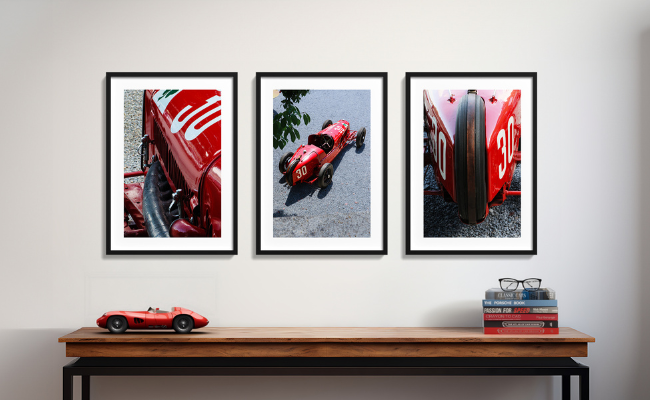
A framed photograph of a vintage red Alfa Romeo P2 race car, numbered 30

ONLY 49 PRINTS

Each photograph is part of a strictly limited edition of 49 — shared across all sizes and formats combined. Every certificate reads 1 of 49. The edition is not divided by size or format. Every buyer owns the same piece.

Hahnemühle Photo Rag Metallic paper

FINE ART PHOTOGRAPH

Printed on Hahnemühle Photo Rag 308gr — a 100% cotton museum-grade paper from one of the world's oldest paper mills, founded in 1584. Rich tones, crisp detail, and a calm matte surface that holds the photograph without reflection.

Two framed posters of a vintage red race car with the number 30

PRINT OR FRAMED

Unframed prints ship flat in rigid protective packaging, ready for your chosen frame. Framed editions are presented in a hand-painted black gallery frame with plexiglass glazing — the standard used by galleries worldwide for safe transport.

STILL MOTION SIGNATURE
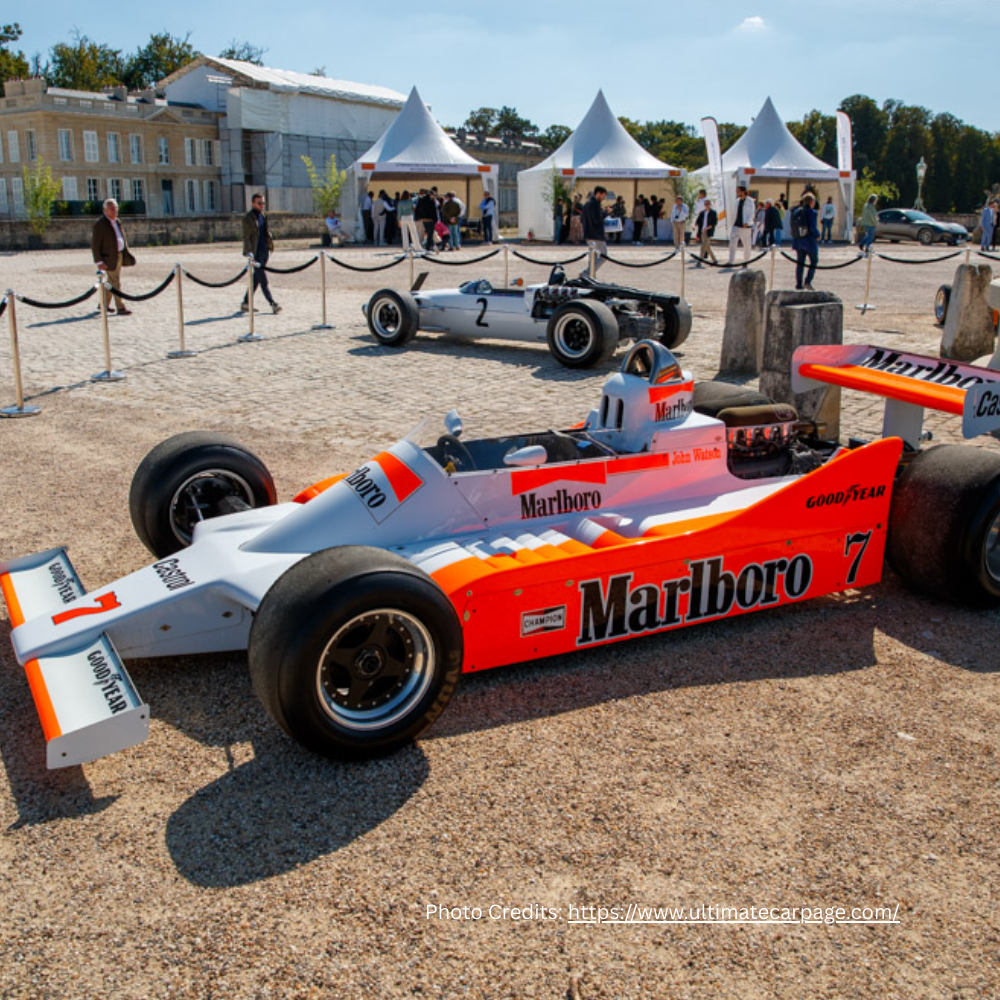
THE McLAREN M28 WAS THE FIRST WORKS McLAREN IN FORMULA ONE HISTORY TO FAIL TO QUALIFY FOR A GRAND PRIX.
THREE CHASSIS BUILT. NINE RACES. REPLACED BY THE M29 BEFORE THE SEASON WAS HALF OVER.

vintage 1979 McLaren M28

THE CAR THEY COULDN’T FIX

The McLaren M28 arrived in Formula One at the beginning of the 1979 season, designed by Gordon Coppuck and powered by the Ford Cosworth DFV — the naturally aspirated three-litre engine that had defined a generation of Grand Prix racing. McLaren needed this car to work. The 1978 season had ended with James Hunt walking away from the team, and Ronnie Peterson — who was supposed to replace him — had been killed at Monza.
John Watson was signed as lead driver, with Patrick Tambay alongside him. Everything depended on the M28.

Coppuck designed the McLaren M28 as the team’s first serious attempt at ground effect aerodynamics, the technology that Colin Chapman and Lotus had used to rewrite the performance rules of the sport. The concept was logical: a narrow aluminium and Nomex honeycomb monocoque with the largest possible underfloor area to generate downforce from venturi tunnels. But the execution went wrong at a fundamental level. The narrow monocoque forced a wider body, and the wider body created frontal area that turned into drag. Through the speed traps at every circuit, the M28 was one of the slowest cars on the grid. Three chassis were built, tested, and found wanting.

The 1979 Formula One World Championship opened in Argentina, where Watson drove the McLaren M28 to third place — a result that briefly suggested the car might be competitive. It was not. As rival teams brought stronger machinery through the spring, McLaren fell backwards. At the Belgian Grand Prix, Tambay failed to qualify — the first time in the team’s history that a works McLaren had missed the grid. He failed again at Monaco. Back-to-back non-qualifications for a constructor that had won the Drivers’ Championship with Hunt in 1976. Team principal Teddy Mayer acknowledged that the aerodynamic concept was flawed. A B-specification was rushed through, but it solved nothing. The car was overweight, draggy, and fundamentally broken in its understanding of ground effect.

After nine races, McLaren replaced the M28 with the M29 at the British Grand Prix. Watson later described the car as the worst Formula One machine he ever drove. Of the three chassis built, one survived into private ownership — chassis number two, which became a show car before being purchased directly from Ron Dennis in 2009. The McLaren M28 represents one of the lowest points in the history of a team that would go on to dominate the following decade with Lauda, Prost, and Senna. It is remembered not for what it achieved, but for what it cost McLaren to learn.

This photograph isolates a section of the M28 bodywork at close range — the cooling louvers, the riveted aluminium panels, the graphic geometry of a livery that became one of the most recognisable in the sport. It is a detail that tells the story of an era when Formula One cars were still built by hand, when aerodynamic theory outpaced engineering capability, and when even the wrong car could carry a livery worth remembering.

Our Curation

This piece exists because of a friendship with a photographer who understands that the surface of a racing car tells as much of its story as a result sheet. The photograph was taken at close range, isolating a section of the McLaren M28 bodywork — the cooling louvers, the panel lines, the geometry of a livery laid over hand-riveted aluminium.

From a larger body of work, this frame was selected for what it reveals about the car’s construction: the interplay between aerodynamic intent and visual identity that defined a transitional moment in Formula One design. Each image was refined to bring forward the texture and depth of the bodywork without altering its character.

The result is not a reproduction. It is a perspective.

Cinematic motion blur of a racing car at speed, capturing the raw emotion of motorsport for Invictus Heights.
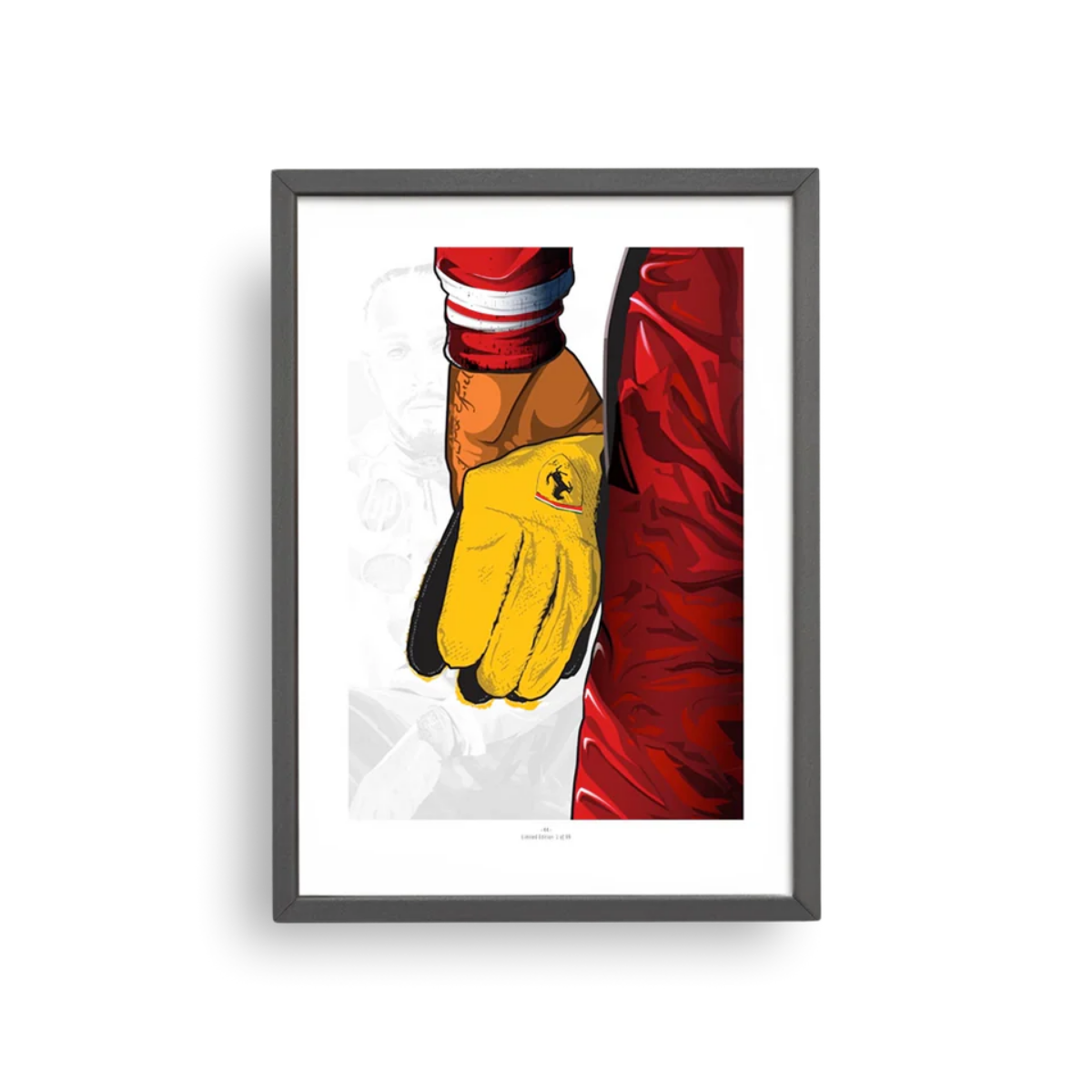
Exclusive Lewis Hamilton and Ferrari automotive art, a limited edition of 99 museum-quality prints by Invictus Heights.

”A true collector’s piece — worthy and immediate addition to my collection.”

— A Ferrari Collector, Italy

Explore work
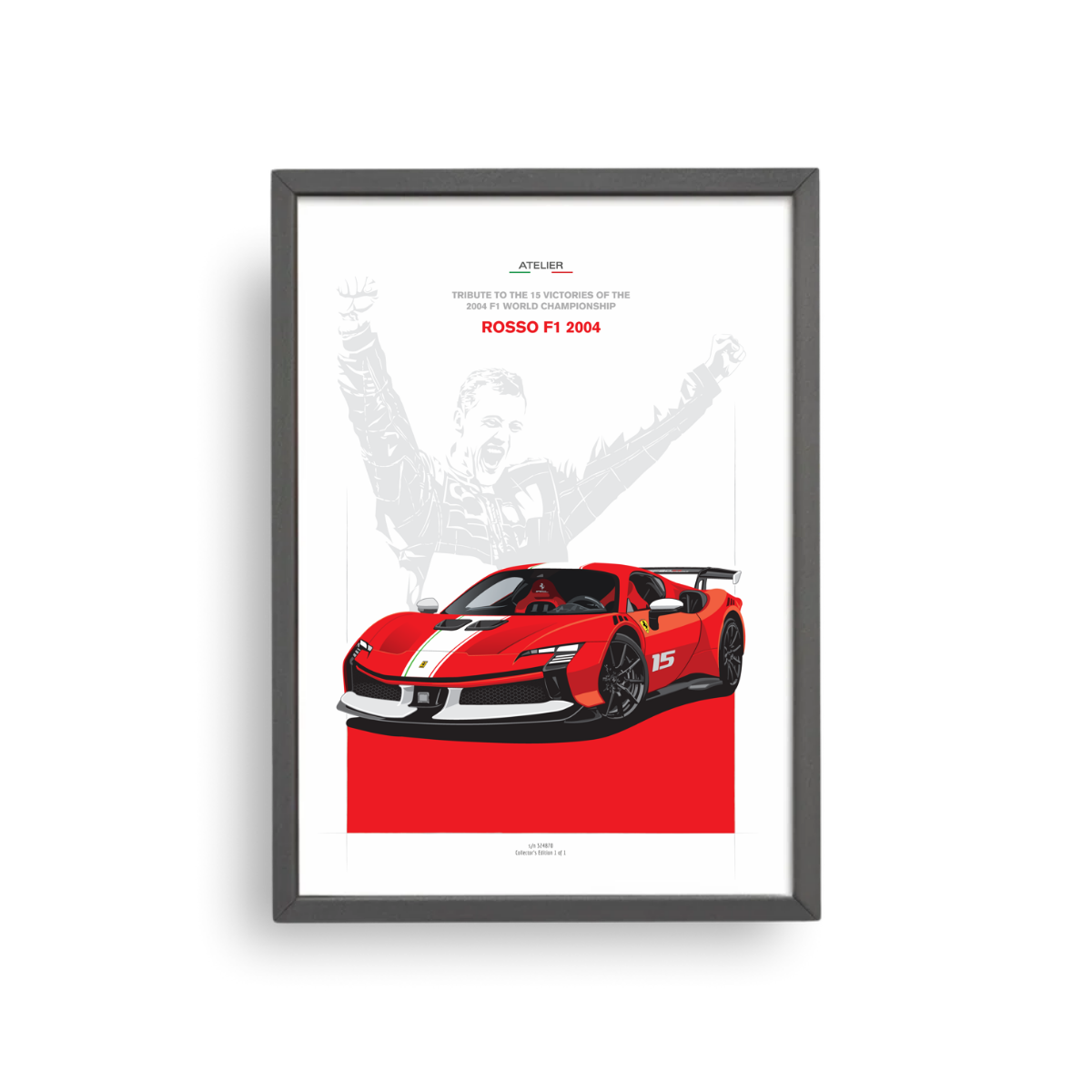
Bespoke Still Motion fine art commission featuring a Ferrari F1 tribute, custom-made for a private collector.

”Pure passion. This artwork captures the very soul of motorsport."

— A Ferrari Collector, France

Learn more

GOING DEEPER

COLLECTING

What it means to own a Still Motion edition — the standard, the certificate, the care.

What collectors should know

committed

The principles behind every piece we produce and every decision we make.

Our commitments
Two framed modern art prints featuring close-ups of red, white, and orange race car elements hanging on a white wall

MAINTENANCE TIPS

CARING FOR YOUR FINE ART PRINT

Giclée prints on archival cotton paper are made to last for generations when treated with care. Handle by the edges only. Keep away from direct sunlight, humidity, and heat sources. If displaying unframed, mount behind glass or plexiglass to protect the surface. To clean, dust the frame or glazing only with a soft, dry microfibre cloth. Never touch the print surface directly.